

It’s common for parents to notice changes in their baby’s head shape during the early weeks. Positional plagiocephaly—often called a “flat head”—is a frequent condition and, importantly, does not affect your baby’s brain development. With early awareness and simple strategies, it can usually be managed very effectively.
What is Positional Plagiocephaly?
Positional plagiocephaly occurs when a baby develops a flat or uneven area on their head. This typically develops within the first 6–8 weeks of life and is often caused by repeated pressure on one part of the skull.
Common reasons include:
- Spending long periods lying on their back in the same position
- Preferring to turn their head to one side
Some babies also have torticollis, where tight neck muscles make it difficult to turn the head evenly. This can increase the likelihood of developing a flat spot.
Signs to Look Out For
While mild head shape differences are normal early on, signs of positional plagiocephaly may include:
- A flat spot on one side at the back of the head
- One side of the forehead appearing more prominent
- One ear sitting slightly further forward
Signs of torticollis can include:
- A consistent head tilt
- Difficulty turning the head both ways
- Feeding better on one side than the other
If you notice any of these signs, it’s a good idea to seek advice from your GP, child and family health nurse, or physiotherapist.
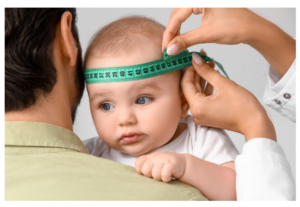
How is it Treated?
Treatment depends on your baby’s age and how severe the flattening is.
- Mild cases: Often improve with simple positioning changes and regular monitoring
- Physiotherapy: Helps address neck tightness, improve movement, and support development
- Helmet therapy: Recommended in more significant cases, usually between 6–12 months
- Surgery: Rare, and only needed if another condition is present
Practical Tips for Home
There’s a lot you can do at home to support your baby’s head shape and development:
| Sleep | Tummy Time |
|
· Gradually increase time as your baby becomes more comfortable |
| Play & Positioning | Limit Time in Baby Containers |
|
Extended time in car seats, swings, and bouncers can:
Where possible, prioritise supervised floor play instead. |
If you would like to check on your child’s physical development or would like support, a paediatric physiotherapy assessment can help. Call our reception team on 02 9907 0321 or visit our booking page.
By Fiona Elliott

Fiona Elliott is an APA Titled Paediatric Physiotherapist at Total Physiotherapy Manly Vale. She has expertise in the treatment of children from infants to high school. She commonly treats children with torticollis, plagiocephaly, toe-walking, musculoskeletal pain and dysfunction, developmental delay and gross motor issues, hypermobility and Ehlers-Danlos Syndrome, Juvenile Arthritis, Developmental Coordination Disorder and movement issues related to Autism Spectrum Disorder. Fiona is experienced in paediatric exercise prescription and a wide range of gentle hands-on treatment modalities including dry needling, visceral manipulation and craniosacral therapy.