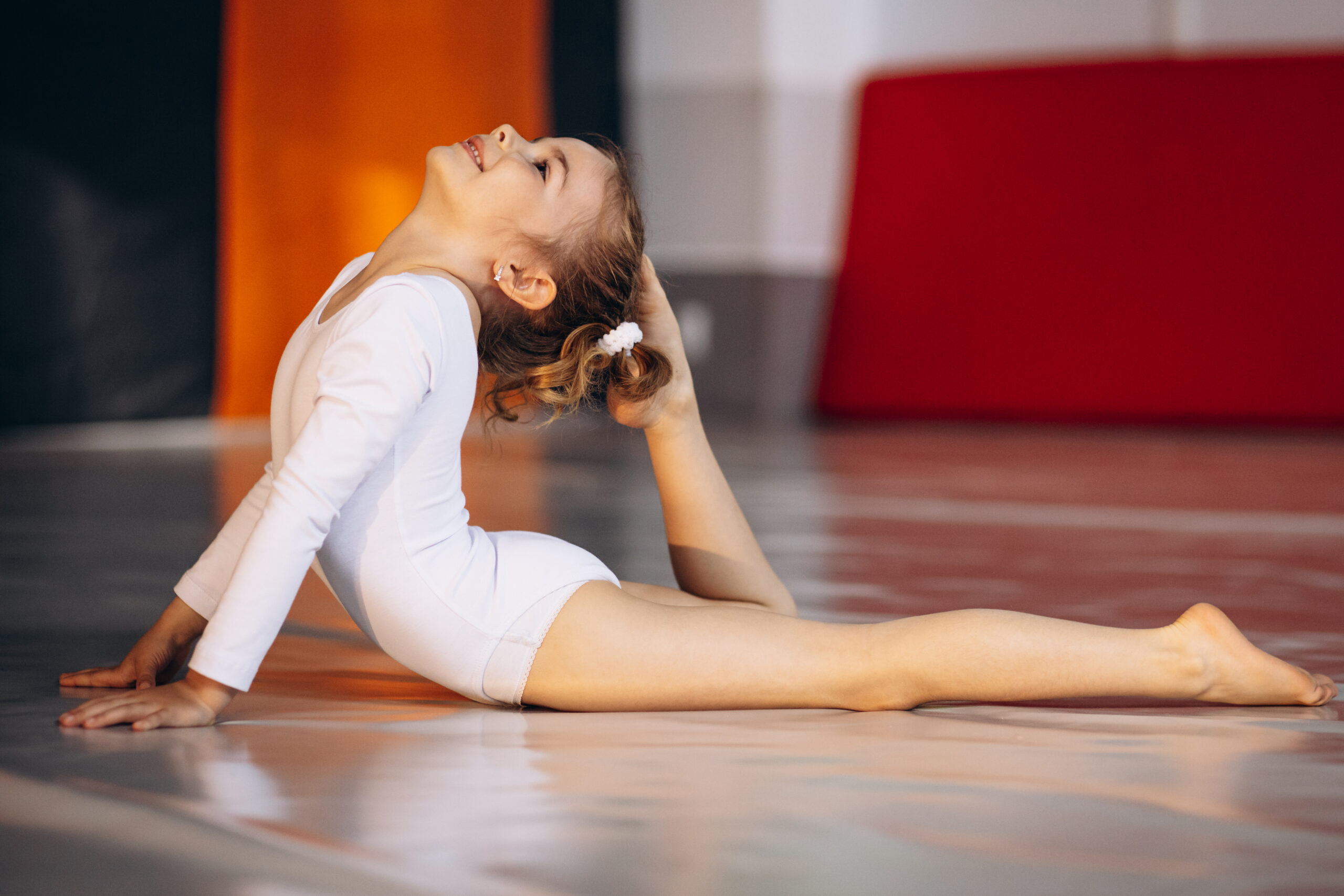

Movement challenges are very common in children with autism spectrum disorder (ASD). These challenges can show up in many ways, including difficulties with balance, posture, flexibility, coordination, speed of movement, and pain sensitivity. While every child with autism is different, these movement differences can have a real impact on daily life.
At school, children may find it harder to sit comfortably, keep up in the playground, or participate confidently in physical education. In social settings, movement difficulties can affect a child’s ability to join games or sports with peers, sometimes leading to frustration or reduced confidence. Over time, this can also impact independence, self-care skills, and overall participation in activities they enjoy.
Children with ASD are also more likely to be less physically active. This is often due to barriers such as motor coordination difficulties, sensory sensitivities, challenges following instructions, or anxiety around group activities. Reduced physical activity can increase the risk of future health conditions and limit opportunities for skill development.
The good news is that regular, well-supported exercise has been shown to benefit children with ASD both physically and functionally. Exercise can help improve muscle strength, walking and running ability, coordination, participation in daily activities, and overall quality of life. There is also growing evidence that physical activity can have positive effects on behaviour, attention, and academic engagement.
How can a paediatric physiotherapist help?
Paediatric physiotherapists are trained to assess and support children’s movement in a way that is child-centred, flexible, and tailored to individual needs. We look beyond “just exercise” and focus on helping children move with confidence in real-life situations.
Physiotherapists can:
- Identify movement and coordination difficulties that commonly occur alongside ASD
- Diagnose and manage co-existing conditions such as Developmental Coordination
Disorder (DCD), which can also be seen in children with ASD and ADHD - Help reduce barriers to physical activity and sports participation
- Design fun, achievable exercise programs that match a child’s interests, strengths,
and sensory preferences
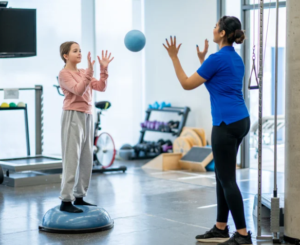
Common goals we work on include:
- Reducing tripping and falling
- Improving running speed to keep up with peers
- Developing ball skills for games such as handball or soccer
- Following a sequence of instructions in sports or PE class
- Improving balance and body awareness
- Building skills for jumping, hopping, and skipping
- Reducing toe walking
- Managing or resolving leg pain
Our aim is to support children to move better, feel more confident in their bodies, and participate more fully at home, school, and in the community.
If you have concerns about your child’s movement or physical development, a paediatric physiotherapy assessment can help. Call our reception team on 02 9907 0321 or visit our booking page.
By Fiona Elliott
Fiona Elliott is an APA Titled Paediatric Physiotherapist at Total Physiotherapy Manly Vale. She has expertise in the treatment of children from infants to high school. She commonly treats children with torticollis, plagiocephaly, toe-walking, musculoskeletal pain and dysfunction, developmental delay and gross motor issues, hypermobility and Ehlers-Danlos Syndrome, Juvenile Arthritis, Developmental Coordination Disorder and movement issues related to Autism Spectrum Disorder. Fiona is experienced in paediatric exercise prescription and a wide range of gentle hands-on treatment modalities including dry needling, visceral manipulation and craniosacral therapy.