
Starting school is an important milestone, filled with excitement and new challenges. However, for some children, persistent issues like bedwetting (nocturnal enuresis), daytime wetting, or soiling (encopresis) can cause significant concern for both the child and their parents, creating a stumbling block just as they should be stepping confidently into the classroom.
While these issues are common, they are not something a child simply has to “grow out of.” This is where pelvic health physiotherapy can play a crucial, non-invasive role in helping a child achieve full bladder and bowel control, ensuring a smoother transition to school life.
Understanding the Role of Physiotherapy
When most people think of physiotherapy, they picture rehabilitation for sports injuries or joint pain. However, a pelvic floor physiotherapist works with the muscles and nerves that control urination and defecation. For children, this is approached in a gentle, age-appropriate, and fun way, without internal examination.
The goal isn’t just to stop the wetting or soiling; it’s to teach the child conscious control and healthy habits that will last a lifetime. There is a saying we like to use in helping these kids: “Bowels before bladder, day before night” This is because for many children sorting out their bowel issues (very often constipation) improves their bladder symptoms.
💩 Addressing Bowel Issues (Soiling)
Soiling, or fecal incontinence, is almost always linked to chronic constipation. The rectum becomes full and stretched, dulling the nerve signals, and allowing soft, watery stool to leak around the hardened mass—a process called overflow incontinence.
- Constipation Management: Physiotherapy works alongside medical advice (often from a pediatrician) regarding diet and laxatives. The physiotherapist focuses on the motor skills needed to pass stool efficiently.
- Toileting Posture: Teaching the child the correct, relaxed squatting position on the toilet—using a step stool to raise the knees above the hips—is vital for allowing the puborectalis muscle to relax and straighten the anal canal. This makes passing stool much easier and more complete.
- Abdominal and Pelvic Floor Coordination: The therapist teaches the child how to gently push using their abdominal muscles (without straining) and how to relax the anal sphincter at the right time.
🚽 Addressing Bladder Issues (Wetting)
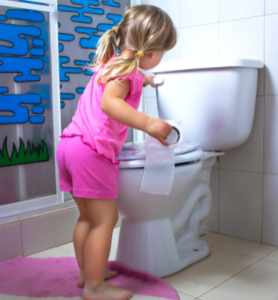
Daytime and nighttime wetting often stem from a combination of factors, including immature bladder habits, poor posture on the toilet, or holding on for too long.
- Bladder Retraining and Education: Many children simply don’t recognize the signals their bladder is sending. The physiotherapist helps the child understand how the bladder works and encourages appropriate voiding schedules—timed trips to the bathroom that prevent the bladder from becoming overstretched.
- Pelvic Floor Muscle Awareness: Wetting can sometimes be linked to muscles that are holding on when they should be relaxing or vice versa. These children will have a “stop-start” pattern when they do a wee. The therapist can use types of biofeedback to help the child learn to fully relax the pelvic floor to empty the bladder completely, and when to gently engage the muscles to stop a leak.
- Fluid Intake Management: Guidance is provided on appropriate fluid intake throughout the day, ensuring the child is hydrated without overloading the bladder, particularly in the hours leading up to bedtime.
The School Readiness Advantage
By addressing these issues proactively, physiotherapy helps a child prepare for school in several significant ways:
- Increased Confidence: Gaining bladder control can help the child be more comfortable in the classroom – no need to ask the teacher to go to the bathroom frequently and reduce the fear of an accident.
- Improved Focus: A child who isn’t distracted by an urgent need to go or the discomfort of a full bladder/bowel can focus better on learning and social interaction.
- Independence: They gain the physical literacy needed to manage their toileting needs independently in a school bathroom setting.
If your child is approaching school age and struggling with persistent wetting or soiling, a consultation with a pelvic floor physiotherapist can provide the targeted, practical solution needed to help them start their school journey happy, healthy, and dry.
At Total Physiotherapy we have the advantage of working alongside our paediatric physiotherapist Fiona Elliott, who can assist kids in improving the gross motor control that may be needed for toileting. We have two pelvic health physiotherapists who can help children with bladder or bowel control problems – Louise Henderson and Rebecca Rutherford.
By Louise Henderson